

1,284+ 5-Star Reviews
Set The Angle. Cut Clean.
🔥 Summer Sale — 50% OFF ends in00:00:00
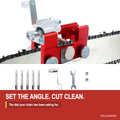
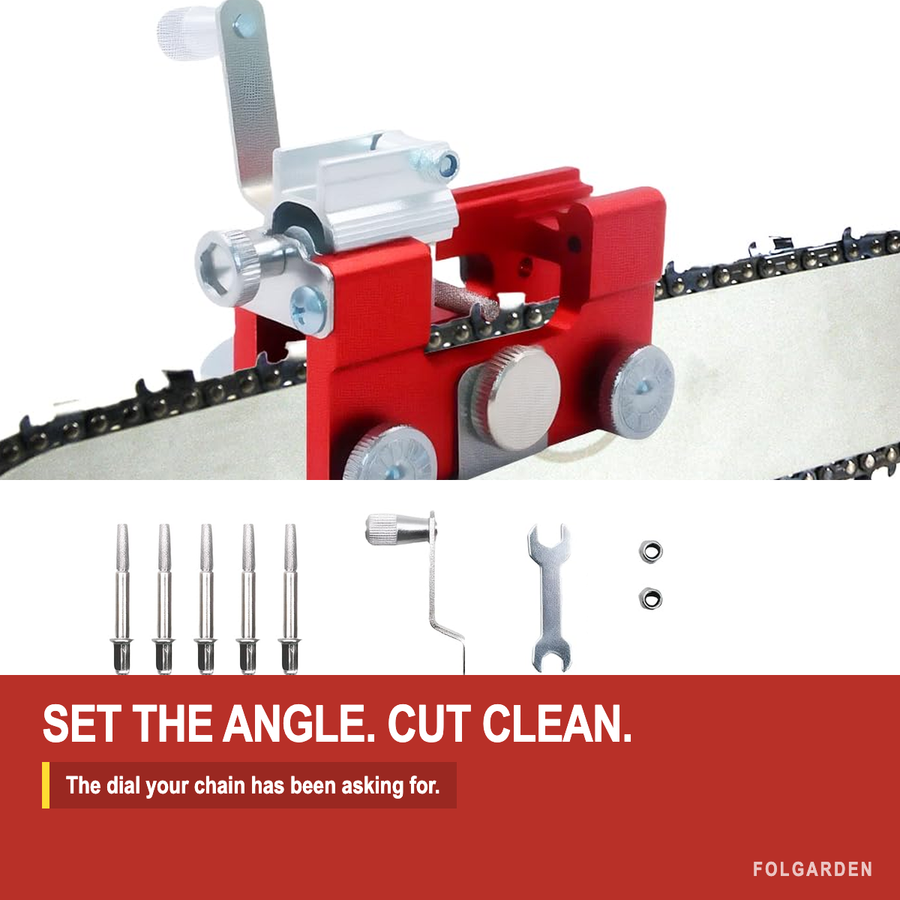
Save 50% Folgarden AngleSet chainsaw sharpener clamped to a chainsaw bar, with its crank, five diamond burrs, wrench and lock nuts
1,284+5-Star Reviews

Your Chain Maker Publishes A Filing Angle. Now You Can Actually Set It.

Sharpen to your chain's angle, not the tool's. It isn't your saw and it isn't your technique. It's The 30-Degree Default: every clamp-on sharpener on the shelf is drilled to one fixed angle, so whatever your chain's maker specified, the tool grinds 30 degrees and your cutters get reshaped instead of resharpened. The AngleSet puts a graduated dial where that fixed hole used to be. You set the angle, clamp it to the bar, and turn the crank. Try it for 90 days; if it doesn't earn its place in your kit, send it back.

$34.99$69.98You save $34.99
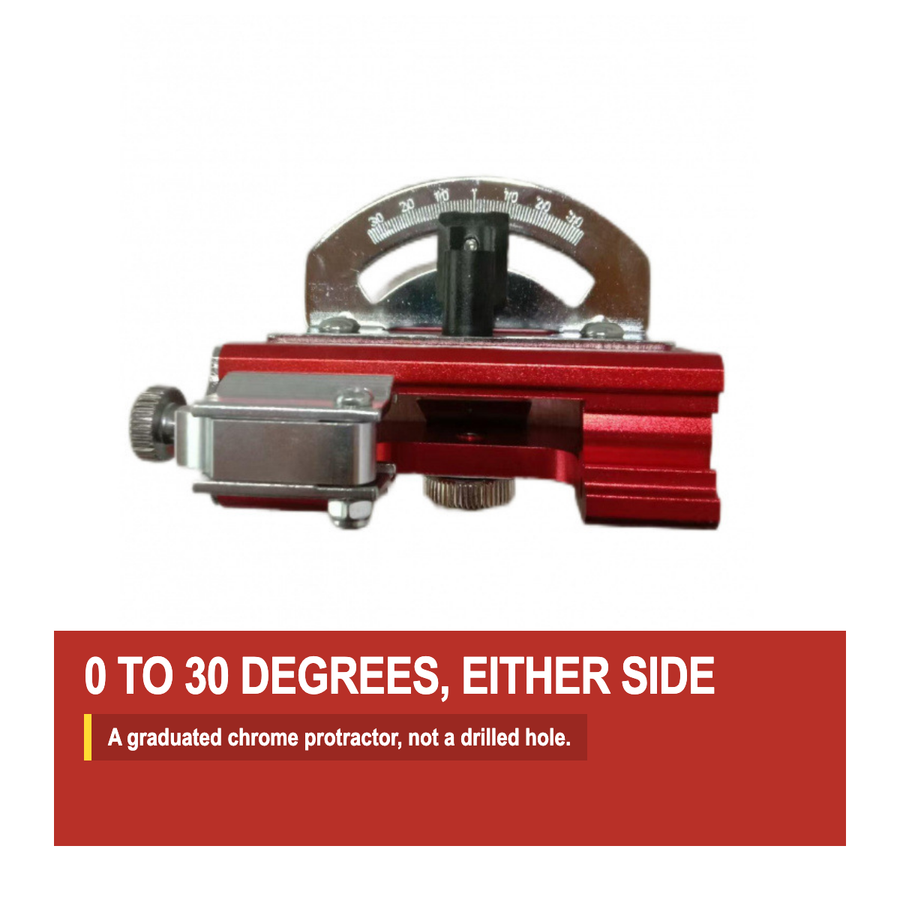
  • Match your chain's own filing angle — a graduated dial swings the guide seat across 0 to 30 degrees on either side of centre
  • Leave the chain on the saw — the jig clamps straight onto the guide bar, so nothing gets dismantled, re-tensioned or lost in the grass
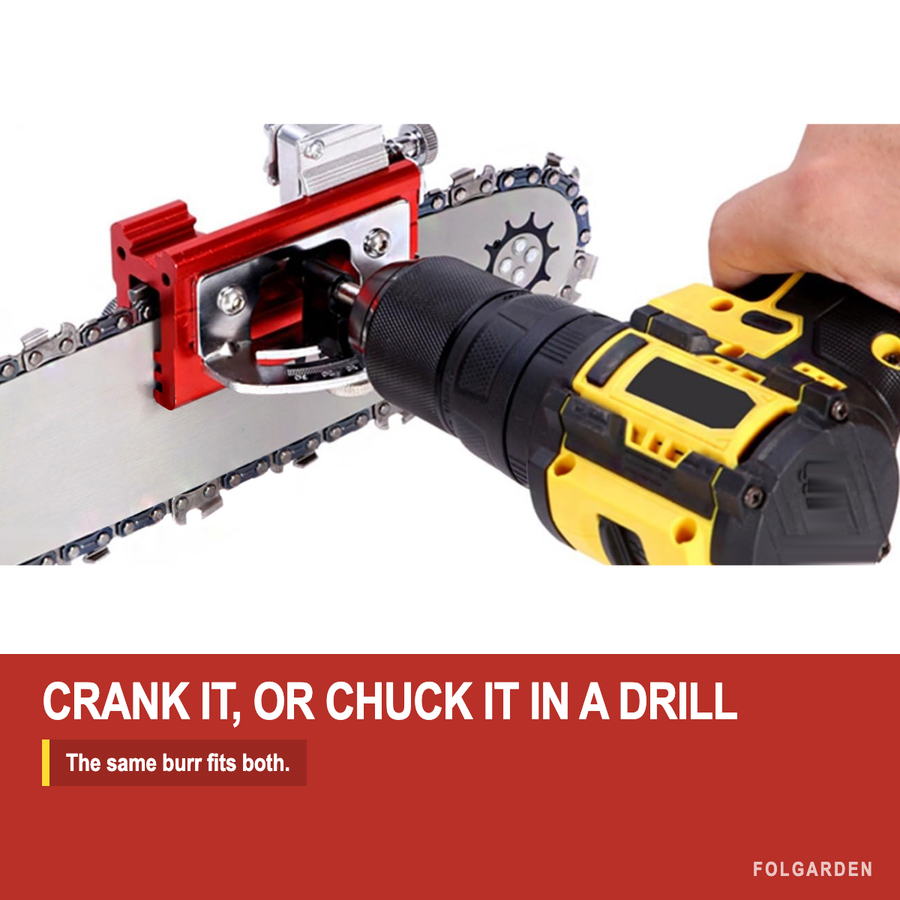
  • Crank it by hand or chuck it in a drill — the same diamond burr fits both, so you pick speed or silence
  • Do both cutter directions without lifting it off — the guide seat swings across and re-sets, and the two halves of the chain end up matched
  • Sharpen where the work is — no cord, no battery and nothing to charge, so a dead saw never ends the afternoon
  • Stop replacing chains that still had life in them — one tool you own instead of a sharpening bill that never stops
Ship by this week|Stock LOW

Set the dial to 25 for my ripping chain, worked through the loop in about twenty minutes, and the next cut threw proper chips instead of dust. — Dale W., Verified Buyer

🚚
Fast Shipping
🔒
Secure Checkout
↩️
90-Day Returns
Two Turns And It Bites

Watch The Dial Do The Work.

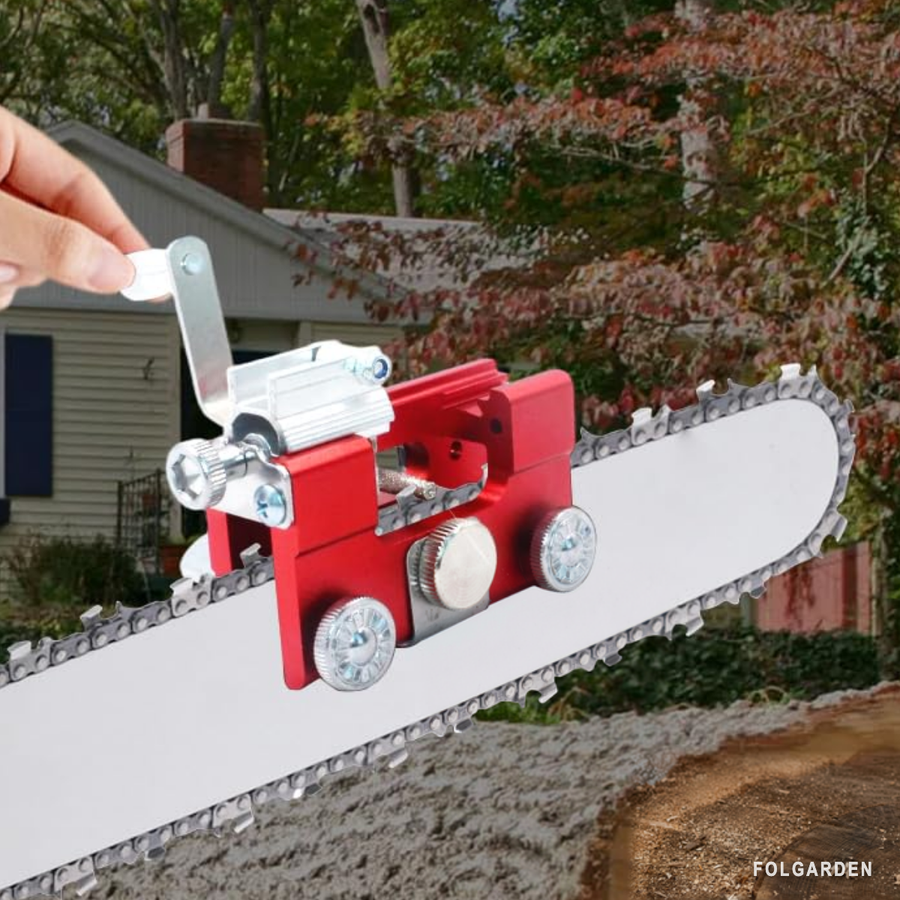
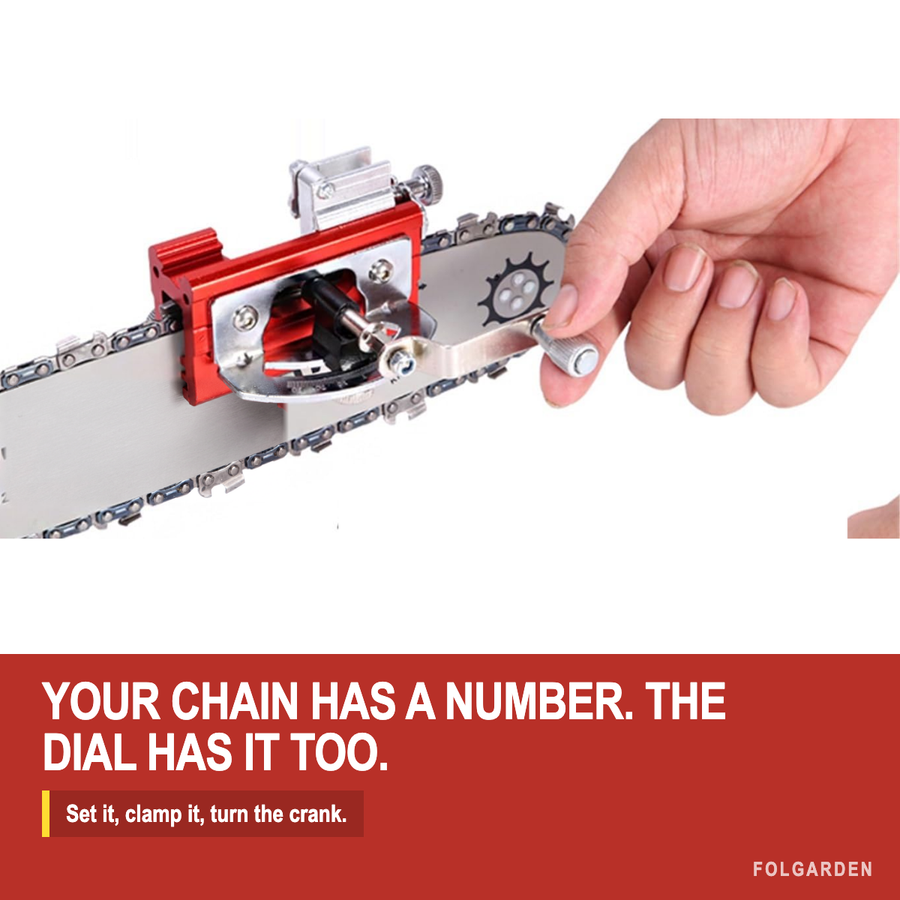
Seeing it once is enough. The jig goes onto a bar in the driveway with the chain still on the saw. The dial gets set against a cutter before a single tooth is touched. Then the same burr goes into a cordless drill on the bench for the chain that has been sitting dull since spring. Built around the filing spec the chain makers publish, not around one hole drilled at a factory.

What the dial changes

One Moving Part Your Old Sharpener Doesn't Have

Everything else in this category clamps, guides and cranks the same way. The difference sits under the guide seat.

The Angle Dial
01

The Angle Dial

A chrome protractor sits under the guide seat, graduated across 0 to 30 degrees on both sides with fine ticks between. Loosen the thumb screw, swing the seat until the burr matches your cutter, or until it reads the figure your chain's maker publishes, and lock it there. Because the angle is finally yours to pick, The 30-Degree Default stops deciding how your chain cuts.

“My hardwood chain is specced at 25 and my crosscut at 30. This is the first jig I've owned that can tell the difference.” — Marcus T.

Clamps To The Bar
02

Clamps To The Bar

Two knurled thumb screws pull the body down onto the guide bar and the chain stays exactly where it is. Because nothing comes apart, there is no tension to reset, no drive link to fish out of the leaves, and no reason to put the job off until the weekend.

“Fifteen minutes from noticing it was dull to being back in the cut. Nothing came off the saw.” — Wayne B.

Crank Or Drill
03

Crank Or Drill

The diamond burr threads into the crank arm for hand work, and the same burr drops into a cordless drill or rotary tool when there is a stack of chains waiting. Because you are not tied to a motor, a flat battery never ends the job, and a spare battery makes it quick.

“Crank out at the fence line, drill on the bench at home. Same tool, same burrs.” — Rick D.

Both Sides, No Flipping
04

Both Sides, No Flipping

Run the left-hand cutters, then swing the guide seat across, set the matching angle and run the right-hand ones. Because the tool never leaves the bar between sides, the two halves of the chain end up matched, which is what stops a saw wandering off the line you aimed it at.

“I used to end up with one side keener than the other and the cut would curve. It tracks straight now.” — Glen P.

Why One-Angle Sharpeners Leave Half Your Chains Wrong

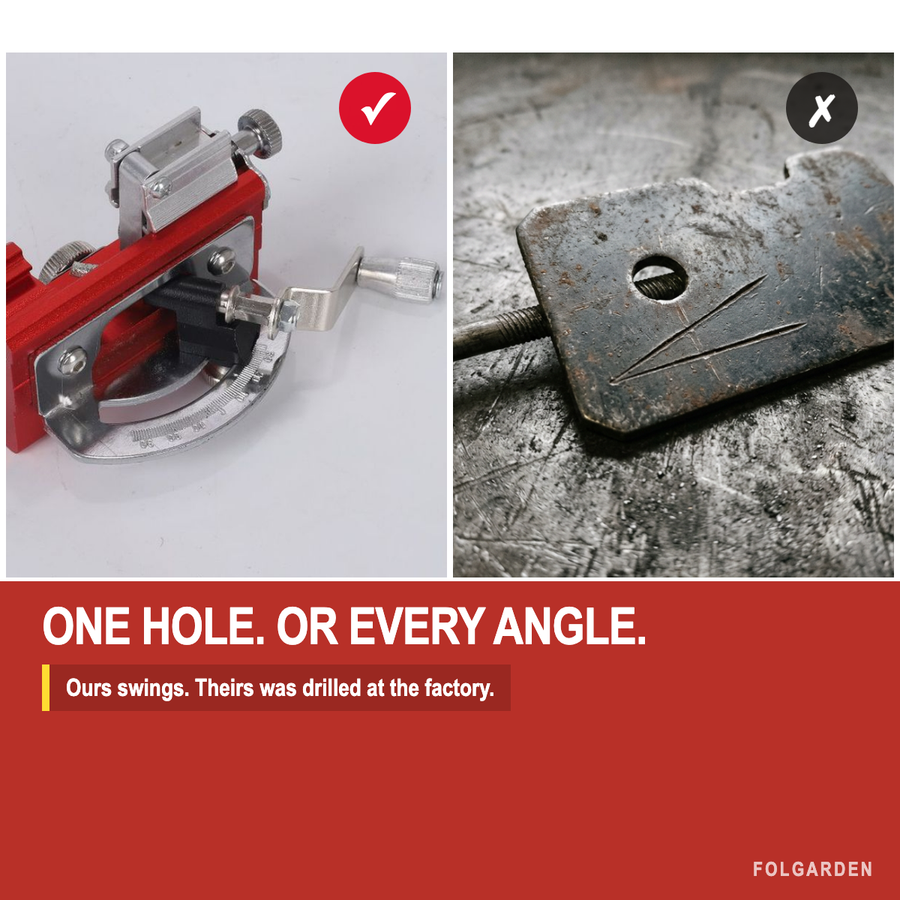
Every clamp-on jig on the shelf is drilled to a single angle. The 30-Degree Default is fine for the one chain that happens to want 30 degrees, and wrong for every other chain you own.

Folgarden AngleSet

Graduated dial sets the guide seat anywhere across 0 to 30 degrees, either side
Follows whatever filing angle your chain's manufacturer publishes
Crank it by hand, or chuck the same burr into a drill when there's a stack to do
Runs both cutter directions without lifting off the bar, so the halves stay matched
One tool you own, sharpening the chains you already have for years
VS

One-Angle Sharpeners

One hole, drilled at the factory, and your chain has to live with whatever it gives
Grinds 30 degrees onto a chain the maker specced at 25, every single time
Crank only, so five chains means five chains of wrist
Comes off and goes back on to reach the second side, and the halves never quite match
Cheap enough to replace, which is exactly what you keep doing
Order Now & Save 50%

Six Places A Sharp Chain Changes The Day

The Firewood Pile

Halfway down the stack the saw starts pushing instead of pulling. Ten minutes with the jig and the back half cuts like the front half did.

After The Storm

Fence line down, half a tree across the drive, no power within reach. The crank works exactly where a charger does not.

Hardwood Day

Oak and hickory ask for a different angle than last month's pine. Set the dial to the chain you're actually running and go.

The Bench Session

Three chains, a cordless drill and a coffee. The same burr turns far faster in a chuck than your wrist ever will.

One For The Truck Box

It rides with the saw rather than living in the shed. Most people end up with one on the bench and one in the truck.

The Gift That Gets Used

For the person who owns a saw, complains it's dull every autumn, and has never once sharpened a chain.

The Firewood Pile

Halfway down the stack the saw starts pushing instead of pulling. Ten minutes with the jig and the back half cuts like the front half did.

After The Storm

Fence line down, half a tree across the drive, no power within reach. The crank works exactly where a charger does not.

Hardwood Day

Oak and hickory ask for a different angle than last month's pine. Set the dial to the chain you're actually running and go.

The Bench Session

Three chains, a cordless drill and a coffee. The same burr turns far faster in a chuck than your wrist ever will.

One For The Truck Box

It rides with the saw rather than living in the shed. Most people end up with one on the bench and one in the truck.

The Gift That Gets Used

For the person who owns a saw, complains it's dull every autumn, and has never once sharpened a chain.

Cut From Metal, Not Moulded From Plastic

The body is anodised aluminium with chrome-plated steel hardware and diamond-coated burrs, because this is a tool that gets clamped, cranked and dropped in wet leaves. The dial exists for a reason. The chain makers' own maintenance manuals publish a filing specification per chain type and tell you to find the page for yours, and the 30 degrees everyone repeats is printed as the general case rather than the only one. A tool with one drilled hole cannot follow that. A dial can.

Every Number, Before You Ask

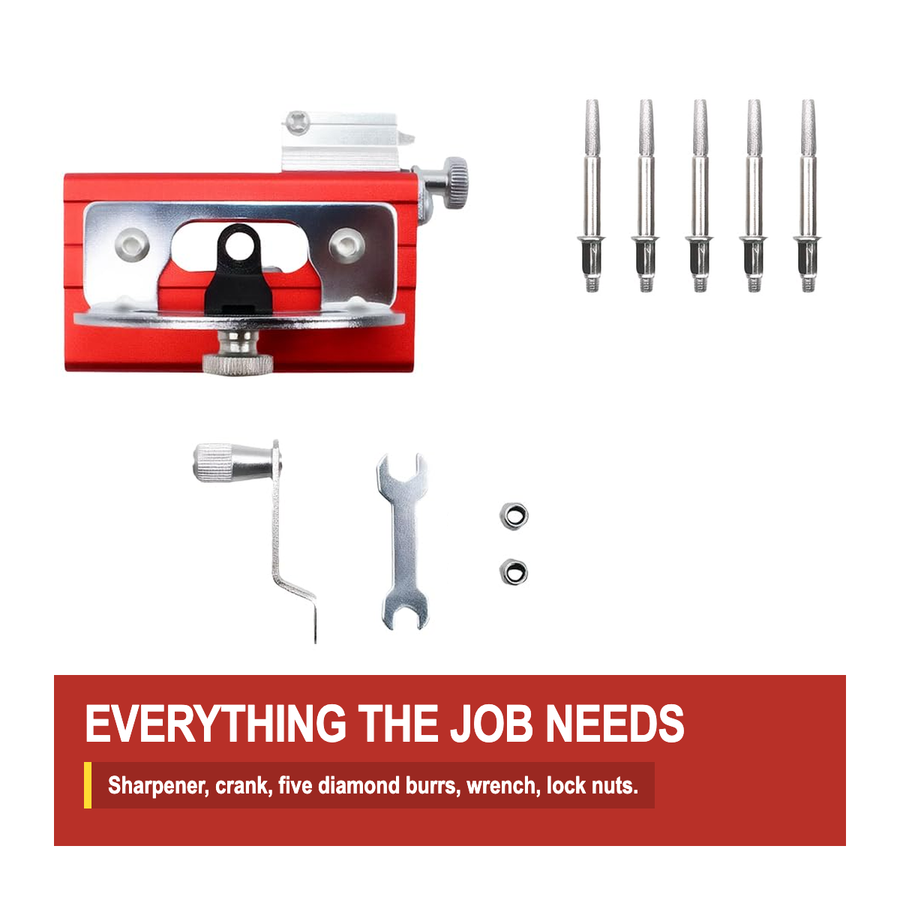
What's in the Box:

1x AngleSet sharpener body · 1x crank handle · 5x diamond grinding burrs · 1x open-end wrench · 2x M6 lock nuts · 1x instruction sheet

Specs:

Sharpening angle:0 to 30 degrees each side of centre, graduated dialset it to your chain's published filing angle instead of the tool's
Fits:Chainsaw guide bars up to 22 ingas or electric, most mainstream saws
Drive:Hand crank included; the same burr also fits a drill or rotary toolno cord, no battery, nothing to charge before you start
Grinding burrs:5x diamond-coated, 4.8 mm diameter x 58 mm longconsumables by design — swap in a fresh one when grinding slows
Body:Anodised aluminium with chrome-plated steel hardwarebuilt to live in a truck box rather than a drawer
Size:9.5 x 6.5 x 2.4 cm (3.74 x 2.56 x 0.94 in)about 10 cm across with the crank fitted
Weight:388 g (13.7 oz)light enough that you actually carry it to the job
Care:Brush the swarf off after each chain and keep the bar rails oileduneven grinding usually means the slider wants a nudge, not a new tool
90DAYmoney-back
guarantee
Buy With Confidence — It's 100% Risk-Free!

Try it for 90 days. If you aren't completely satisfied, we'll refund every penny. No questions asked.

What Chainsaw Owners Say After The First Chain

Sharpening Accuracy4.8
Ease Of Use4.6
Build Quality4.7
Value4.9
Portability4.8
4.7
Based on reviews from
1,284+ customers
Dale W.Verified
Posted Aug 14
Threw proper chips again

Set the dial to 25 for my ripping chain and worked through the loop in about twenty minutes. The next cut threw proper chips instead of that fine dust. That was the whole test as far as I'm concerned.

Marcus T.Verified
Posted Aug 9
Finally knows 25 from 30

My hardwood chain is specced at 25 and the crosscut at 30. Every clamp-on I've owned before this ground both at 30 and I just lived with it. This one asked me first.

Wayne B.Verified
Posted Aug 2
Chain never left the saw

Clamped it to the bar in the driveway and pulled the chain through by hand. Back in the cut inside twenty minutes with nothing dismantled and no tension to reset.

Rick D.Verified
Posted Jul 28
Crank out there, drill at home

Took the crank down to the fence line where there's no power for half a mile. Back at the bench I put the same burr in the cordless and did two more chains in the time the first one took me.

Glen P.Verified
Posted Jul 21
I assumed it was another gimmick

Honestly bought it expecting a drawer ornament. What changed my mind was the dial locking solid. I checked it against a cutter twice and it hadn't shifted a hair. Saw tracks straight now instead of curving right on me.

Terry K.Verified
Posted Jun 30
Fiddly the first time, easy after

First setup took me a good fifteen minutes of reading the sheet and fussing with the slider. The second chain took five. Worth pushing through that first one, but don't expect it to click instantly.

Dale W.Verified
Posted Aug 14
Threw proper chips again

Set the dial to 25 for my ripping chain and worked through the loop in about twenty minutes. The next cut threw proper chips instead of that fine dust. That was the whole test as far as I'm concerned.

Marcus T.Verified
Posted Aug 9
Finally knows 25 from 30

My hardwood chain is specced at 25 and the crosscut at 30. Every clamp-on I've owned before this ground both at 30 and I just lived with it. This one asked me first.

Wayne B.Verified
Posted Aug 2
Chain never left the saw

Clamped it to the bar in the driveway and pulled the chain through by hand. Back in the cut inside twenty minutes with nothing dismantled and no tension to reset.

Rick D.Verified
Posted Jul 28
Crank out there, drill at home

Took the crank down to the fence line where there's no power for half a mile. Back at the bench I put the same burr in the cordless and did two more chains in the time the first one took me.

Glen P.Verified
Posted Jul 21
I assumed it was another gimmick

Honestly bought it expecting a drawer ornament. What changed my mind was the dial locking solid. I checked it against a cutter twice and it hadn't shifted a hair. Saw tracks straight now instead of curving right on me.

Terry K.Verified
Posted Jun 30
Fiddly the first time, easy after

First setup took me a good fifteen minutes of reading the sheet and fussing with the slider. The second chain took five. Worth pushing through that first one, but don't expect it to click instantly.

Questions? Answered.

It clamps onto the guide bar, so what matters is the bar and not the engine. It suits most mainstream gas and electric saws with bars up to 22 inches. Measure your bar before you order, and if the jig will not sit flat on yours, get in touch and we will make it right.

No. The jig clamps onto the bar with the chain in place and you pull the chain through by hand between cutters. Nothing comes apart, so there is no tension to reset and no drive link to lose in the grass.

Whatever your chain's manufacturer publishes for that chain. Most crosscut chains are filed at 30 degrees and many hardwood and ripping chains at 25, and the dial reaches both. To be straight with you: it covers 0 to 30 degrees each side, so it does not reach the 35 degrees a few chisel chains specify.

Not at hand-crank speed, because there is no motor and no heat to build up. If you drive the burr with a drill, use a low speed and light pressure the way you would with any grinding bit, and let the diamond do the work.

Plan for the first one to be slow while you find your setup, and later chains to go much faster. Each cutter is only a few turns of the crank. The time goes into positioning, not grinding.

Five diamond-coated burrs, the crank handle, an open-end wrench, two M6 lock nuts and the instruction sheet. Burrs are consumables by design, so swap in a fresh one the moment grinding starts to slow down rather than pressing harder.

Send it back within 90 days and we will refund you. No restocking fees and no argument. If it does not earn its place in your kit, it should not be taking up space in it.

Set The Angle Before The Next Cut

Join 1,284+ owners who stopped grinding every chain to the same angle. Most people end up with one on the bench and one in the truck box. This sale ends soon and stock is running low.

Order Now & Save 50%
🔒 Secure checkout · 90-day money-back guarantee